
Featured snippets—those search result boxes sitting above everything else—capture 8-15% of search traffic, which honestly means you’re leaving serious clicks on the table if you’re ignoring them. They come in four flavors: paragraphs, lists, tables, and videos. Google picks snippets based on content quality, site credibility, and how directly you answer what people actually want. Get your formatting right (think 40-60 word paragraphs, bullet points, clear structure), avoid common mistakes like rambling answers, and you’ll reveal a framework that transforms your visibility into genuine audience growth.
Key Takeaways
- Featured snippets appear in “position zero” above traditional results and capture 8-15% of search traffic, boosting click-through rates by 20-30%.
- Four main formats exist: paragraph snippets (40-60 words), tables for comparisons, lists for processes, and video snippets for visual content.
- High-quality content requires direct answers to user queries, strong domain authority via backlinks, and updated information signaling freshness to Google.
- Target long-tail keywords reflecting genuine user intent like definitions and step-by-step instructions, positioning optimized content within the first 300 words.
- Avoid vague definitions, answers exceeding 60 words, and poor formatting; prioritize mobile-friendly designs with structured lists for maximum snippet eligibility.
What Are Featured Snippets and Why They Matter

Featured snippets—those little answer boxes Google plops right at the top of search results—are basically the search engine’s way of cutting out the middleman.
You’re looking at position zero. The golden real estate above traditional rankings.
Here’s why they matter: they drive clicks. Studies show snippets capture 8-15% of search traffic, which isn’t nothing. More importantly, they signal Google’s attempt to match user intent directly. When you search “how long do apples last,” you’re not hunting for blog posts—you want an answer. Fast.
For your importance analysis, snippets represent a fundamental shift.
They’re not replacing organic results; they’re redefining what winning looks like. You’ve got maybe 40-60 words to hook someone. That’s constraints-as-opportunity territory.
Miss the snippet, and you’re basically invisible to impatient searchers (so, everyone).
The Four Types of Featured Snippets Google Uses
Google’s actually narrowed it down to four main formats you’ll encounter, and honestly, they’re pretty straightforward once you know what you’re looking for.
You’ve got your classic paragraph snippets (the wordy ones that answer “how” or “what” questions), plus tables and lists that organize information when you’re searching for comparisons or step-by-step stuff.
The fourth type—video snippets—is the newer kid on the block, though it’s still rarer than the others, which makes spotting them feel like finding money in your jacket pocket.
Paragraph Snippets Explained
they’re not all built the same way.
Paragraph snippets—the most common type you’ll see—pull 40-60 words directly from your content. They’re Google’s go-to format because they work.
Your paragraph structure matters here. Keep your content brevity sharp; dense blocks of text won’t cut it.
You’re competing against straightforward, punchy answers. Write like you’re explaining something to a friend who’s in a hurry.
Front-load your key information. Google’s algorithm doesn’t dig deep into walls of text. Instead, it scans for clear, organized paragraphs that answer specific questions immediately.
To maximize your chances of appearing in featured snippets, conduct keyword research to identify the specific questions your audience is asking. Get featured with paragraphs, and you’ll drive serious traffic—assuming your answer actually beats what’s already ranking.
Table and List Formats
While paragraph snippets dominate the featured snippet landscape, they’re only part of the story. You’ve also got tables and lists competing for that prime real estate at the top of Google’s search results.
Tables work brilliantly for comparison data—think pricing breakdowns or feature matrices. Google loves organized information, and table examples make complex data instantly digestible.
Lists? They’re your secret weapon for step-by-step processes and ranked items. Your list strategies should prioritize clear numbering and parallel structure.
Here’s the thing: these formats get clicked more often because users scan them faster. You’re not fighting walls of text—you’re delivering exactly what searchers want.
Implementing proper tracking metrics ensures you can measure which featured snippet formats drive the most traffic and engagement to your site.
Format matters. A well-structured table or list isn’t just prettier; it actually ranks better and drives more traffic to your site.
How Google Selects Featured Snippet Content

You’ve probably noticed that Google doesn’t just grab random text from the first result—it’s actually pretty picky about what makes the cut.
Your content needs to nail three critical factors: it’s gotta be genuinely helpful and directly answer what people are searching for, your site needs the credibility juice (good backlinks, domain authority, that sort of thing), and here’s the kicker—you’ll boost your chances considerably by implementing structured data markup, which basically tells Google’s robots, “Hey, this info is organized and trustworthy.” Remember that organic traffic generated from featured snippets tends to be more valuable and stable than other traffic sources. Think of it as giving Google’s algorithm a cheat sheet instead of making it figure everything out from scratch.
Content Quality and Relevance
Three core factors determine whether Google plucks your content for a featured snippet: relevance, authority, and structure.
You’ve got to match user intent precisely—what’s someone actually searching for? That’s your relevance signal. Google’s semantic search capabilities now understand context better than ever, so you’re not just matching keywords anymore. You’re answering the actual question.
Your content depth matters enormously. Surface-level answers? Skipped. You need topical authority—demonstrating you know your stuff across related topics. Fresh content gets priority too. Google notices when you update posts (we’re talking weeks, not years).
Don’t forget readability factors. Short paragraphs, clear formatting, bullet points. Multimedia usage helps—images, videos, tables break things up. Implementing structured data markup can further enhance how search engines interpret and display your content in featured snippets.
And here’s the thing: engagement metrics signal quality. When users stick around, Google notices. That’s real authority talking.
Page Authority and Trust Signals
Google’s algorithm doesn’t just peek at your content—it investigates your entire domain like a background check. Your page authority and trust signals matter enormously here.
You’ll want to build authority through backlinks from reputable sites, which Google views as votes of confidence. Domain age helps too (older doesn’t always mean better, but consistency counts).
Your author credentials matter—especially for YMYL topics like health or finance. Trust signals include SSL certificates, clear contact information, and transparent authorship. Implementing SSL certificates and ensuring encrypted data transmission strengthens your domain’s trustworthiness in Google’s eyes.
When you’re gunning for featured snippets, Google favors pages from established domains with proven track records. It’s not fair exactly, but that’s how the algorithm works.
Sites like Mayo Clinic crush it for health snippets because they’ve earned that trust over years.
Your job? Build legitimacy systematically.
Structured Data Implementation Matters
Structured data is basically your way of whispering directly to Google’s ear—telling it exactly what your content means without relying on the algorithm to figure it out through guesswork.
You’re using semantic markup—languages like JSON-LD and microdata—to label your content’s actual purpose. Schema.org offers pre-built schema examples for everything: recipes, articles, FAQs, definitions.
Here’s the thing: Google can’t always interpret context alone. Implementation techniques matter enormously. You’ll avoid common errors (mismatched data types, incomplete fields) by validating your markup properly. Schema plugins can streamline this validation process and ensure your markup remains compatible with the latest search engine standards.
The benefits analysis is straightforward: featured snippets favor websites with clean, accurate structured data. It’s not magic. It’s just giving Google permission to trust you instead of guessing.
Why Featured Snippets Matter: Real Traffic Gains
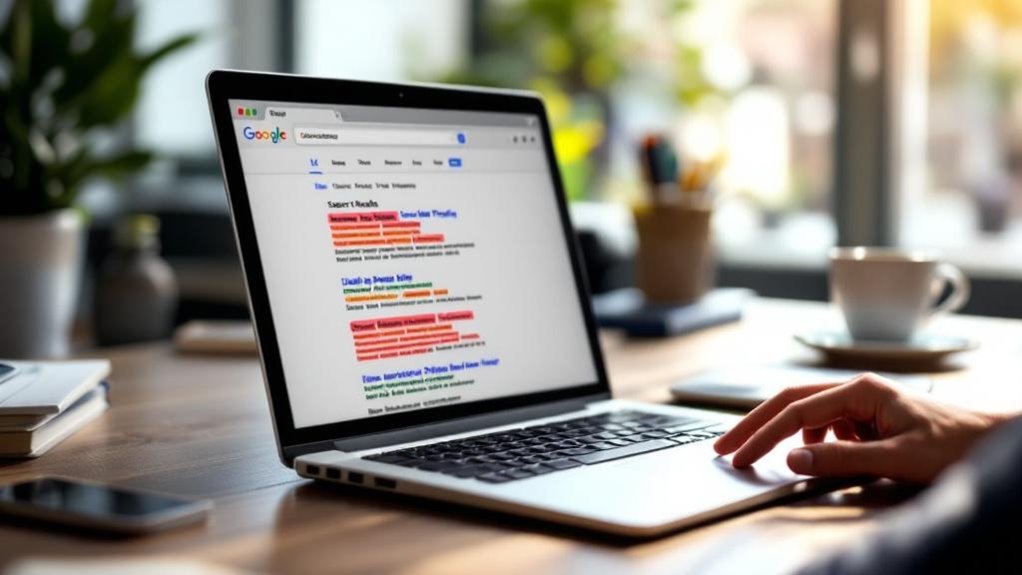
Position zero—that’s what SEO folks call the featured snippet spot, and honestly, it’s not just industry jargon trying to sound important.
You’re looking at real traffic analytics here. Studies show snippet optimization can boost click-through rates by 20-30%, which beats most SERP features hands down.
Here’s the thing: you’re capturing audience engagement before people even visit your site. They’re reading your answer right there on Google.
Your content strategy should target user intent directly—answer the question people actually ask, not the one you think sounds better.
The SEO benefits stack up fast. Better snippet placement means more visibility, more clicks, more conversions.
You’re fundamentally getting free real estate at the top of search results. That’s not theoretical. That’s measurable growth. Implementing search engine optimization strategies focused on featured snippets can significantly enhance your website authority and establish your brand as a trusted resource in your industry.
The 3-Step Framework for Winning Featured Snippets
Now that you know snippets drive real traffic, you need a repeatable system to actually claim them.
Here’s your snippet strategy broken down into three actionable steps.
First, identify snippet opportunities by searching your target keywords and spotting which results already feature snippets.
You’re not reinventing the wheel here—you’re studying what Google already wants to showcase.
Second, apply optimization techniques that match the snippet format.
If it’s a list, structure your content as a clear numbered or bulleted list.
For definitions, lead with a concise 40-60 word explanation. Tables work for comparisons.
Structuring your content this way also improves overall SEO performance by ensuring search engines can easily parse and prioritize your most valuable information.
Third, place this optimized content early in your article—ideally within the first 300 words.
Google rewards clarity and accessibility.
That’s it. Follow this framework consistently, and you’ll capture snippets that funnel qualified traffic directly to your site.
Keyword Research for Featured Snippet Wins

How do you know which keywords are actually worth targeting for snippets? You’ll want to focus on questions people are genuinely asking—not vanity searches that’ll never convert.
Start with keyword intent. Are people looking for definitions? Lists? Step-by-step instructions? Google rewards specificity. Then do competitor analysis. What’s already ranking in positions zero? If your competitors haven’t cracked it, you’ve got an opening. Understanding keyword research strategies will help you identify which snippet opportunities align with your content capabilities and business goals.
| Keyword Type | Search Volume | Snippet Potential |
|---|---|---|
| “How to” phrases | 15K-50K | Very High |
| Definition queries | 5K-20K | High |
| List-based questions | 10K-40K | Very High |
| Comparison queries | 8K-25K | Medium |
Target long-tail variations. They’re less competitive and often snippet-hungry. Your niche expertise matters here—you’re competing against content farms, not fortune 500s.
Structuring Your Content to Win Featured Snippets
You’ve got to make your content a breeze to scan—because let’s face it, nobody’s reading word-by-word anymore (and Google’s AI knows it).
Answer the question users actually asked right at the top, before you build context or backstory, since featured snippets grab that direct answer and run with it.
The formatting matters just as much as the words: bullet points, short paragraphs, and clear headers turn your content into snippet-friendly real estate that Google can’t ignore.
Incorporating local schema markup on your pages provides additional context for search engines, which can help your structured content qualify for featured snippet eligibility in local searches.
Format Content For Scanability
Because Google’s algorithm scans content in milliseconds, you’ve got to make your information digestible at a glance. Your content layout directly impacts whether you’ll snag that featured snippet or get buried.
Here’s what actually moves the needle on readability factors:
- Use short paragraphs (2-3 sentences max)
- Bold key terms that answer questions directly
- Break ideas into bullet points instead of walls of text
- Use descriptive headers that preview your answer
Think of it this way: you’re competing against thousands of other pages. Google favors content that requires minimal cognitive effort. Short sentences. White space. Strategic formatting. Proper line-height settings enhance how easily your content can be scanned and understood by both algorithms and readers.
These aren’t just nice-to-haves—they’re snippet-winning essentials. Your formatting choices determine whether algorithms (and humans) actually read what you’ve written.
Answer Questions Directly First
When Google pulls a featured snippet, it’s grabbing the first thing that directly answers the user’s question—not the most eloquent explanation buried three paragraphs down.
You’ve got maybe two sentences to nail it. That’s your direct answer zone. Front-load concise responses before diving into supporting details. This clarity focus aligns with actual search behavior.
People ask Google questions expecting immediate answers, not essays. Different question types demand different approaches: “What is?” needs definitions, “How to?” needs steps, “Why?” needs reasoning.
Your snippet optimization strategy hinges on understanding this hierarchy. Answer the question first. Elaborate second.
That’s not just smart content strategy—it’s respecting how humans actually search. Google’s algorithm knows this. You should too. Research shows that visual content with images receives significantly more engagement, so combining direct answers with supporting visuals can further enhance your featured snippet chances.
Formatting for Featured Snippets

Getting your content picked for a featured snippet isn’t magic—it’s mostly about formatting like Google’s algorithm actually expects you to.
You’re competing against thousands of pages, so structure matters.
Here’s what actually works:
- Use clear title optimization with your target question built in
- Lead with a direct answer (seriously, just say it)
- Format with bullet points breaking down key info
- Keep paragraphs under 60 words max
Google’s crawlers scan for readability.
They want content that’s scannable, organized, and answers quickly.
Bullet points aren’t just nice—they’re your secret weapon.
Your title should telegraph exactly what you’re answering.
Skip the clever wordplay; be obvious instead.
The algorithm rewards straightforward formatting because it helps users, not because Google’s feeling generous.
Since user experience directly impacts how Google evaluates content quality, ensuring your formatting enhances readability will also support your SEO performance.
Snippet-Killing Mistakes (And How to Fix Them)
vague definitions, answers longer than 60 words, and missing structure. Google wants clarity, not your entire essay.
Our top snippet optimization tips? Lead with your answer. Use bullet points for lists. Keep definitions concise and punchy. Format tables for comparisons—Google loves those.
Lead with answers. Use bullet points. Keep it punchy. Format tables. Google rewards clarity.
The real kicker: most sites ignore mobile formatting entirely.
Your snippet might look sharp on desktop but collapse on phones (where most searches happen, by the way).
Fix these common errors now, and you’ll actually compete. Remember, engaging your target audience through clear snippet formatting directly impacts your search engine rankings and reduces bounce rates.
Learning From Competitors: Finding Your Snippet Opportunity

Why waste time guessing what Google wants when your competitors are literally showing you?
Your competitor analysis starts simple: search your target keywords and study who’s already ranking for snippets. You’ll spot snippet gaps—those juicy opportunities they’ve missed.
Here’s your action plan:
- Identify competitors dominating your niche
- Document their snippet format and length
- Note questions they haven’t answered thoroughly
- Track their content differentiation tactics
This isn’t about copying—it’s about understanding user intent better than they do.
Maybe they’re using paragraphs when lists work better. Perhaps their answer’s incomplete. Your ranking strategies should exploit these weaknesses while providing genuinely superior content.
You’re reverse-engineering success. Google’s already told you what works. Now you’re just listening. Use competitive analysis tools like SEMrush or Ahrefs to systematically track which snippets your competitors are capturing across your target keywords.
Frequently Asked Questions
How Long Does It Typically Take to Rank for a Featured Snippet?
You’ll typically need three to six months of consistent work using snippet optimization strategies and keyword targeting effectiveness. However, you can rank faster by targeting less competitive queries and optimizing your content structure immediately.
Can You Lose a Featured Snippet Once You’ve Won It?
Yes, you can lose your featured snippet—it’s not permanent real estate. You’ll need consistent snippet positioning and snippet maintenance to keep competitors from stealing your top spot.
Do Featured Snippets Help With Voice Search Optimization?
You’ll definitely benefit from featured snippets for voice search optimization. They’re naturally conversational, which voice assistants prefer. Your snippet visibility increases considerably, boosting your chances of capturing those voice search benefits substantially.
How Do Featured Snippets Affect Click-Through Rates and Organic Traffic?
Like a spotlight on stage, featured snippets magnify your visibility. You’ll see increased click behavior when ranking factors align with user intent. Different snippet types trigger search algorithms to elevate your organic traffic substantially.
What’s the Relationship Between Featured Snippets and Traditional Ranking Positions?
You’ll find featured snippets operate independently from traditional rankings. While you’re optimizing for snippet types and ranking factors, you’re fundamentally competing in a separate SERP real estate. Your position zero appearance doesn’t replace your organic ranking.
Final Thoughts
Featured snippets aren’t just fancy—they’re your fast track to top real estate on Google (position zero). With proper positioning, perfect formatting, and persistent practice, you can win that coveted spot and watch your traffic grow.
Ready to master featured snippets and dominate search results? Innovative Solutions Group has over 30 years of experience in website design and digital marketing services. Our team knows how to sidestep the snippet-killing slip-ups and position your content for maximum visibility.
Contact us today to get started:
Phone: 406-495-9291
Email: iteam@inovativhosting.com
Website: https://inovativhosting.com
Let’s transform your search presence into measurable results.