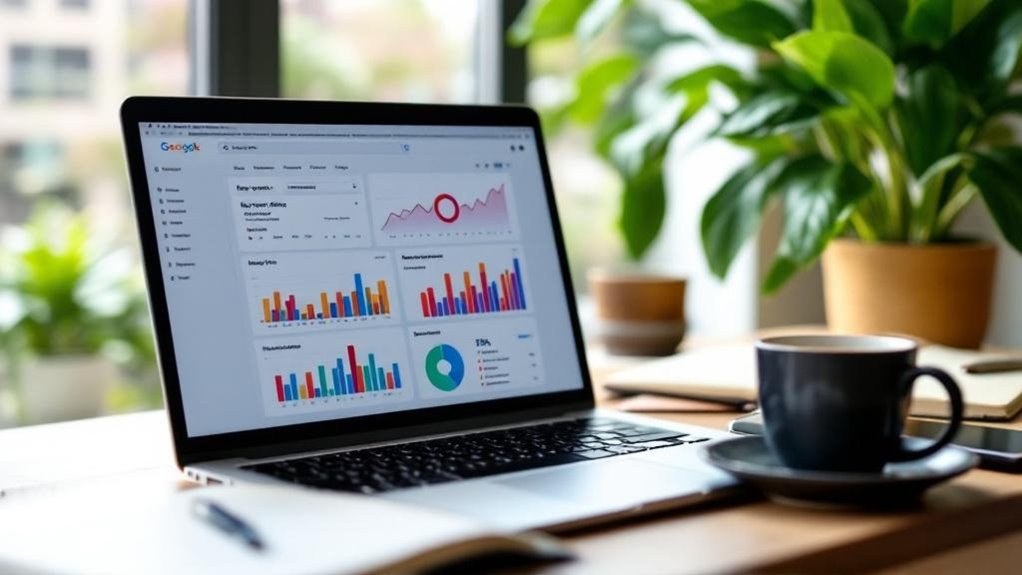
SEO’s basically making Google understand your site deserves to show up when people search for what you offer. You’re competing against thousands of others, so you need quality content, decent site speed, mobile optimization, and backlinks from legit sources. Search engines check your keywords, user engagement, and technical foundation to rank you. Skip SEO? You’re handing customers straight to competitors. The real opportunity emerges once you understand how these ranking factors actually work together.
Key Takeaways
- SEO optimizes your website for search engines to drive organic traffic and build credibility without relying on paid advertising.
- Content quality, backlinks, user engagement, and site relevance are the primary Google ranking factors that determine your visibility.
- Keyword research identifies real search phrases your audience uses, guiding content creation that matches user intent and search behavior.
- Technical SEO essentials include site speed, mobile-friendliness, and crawlability, which directly impact both rankings and user experience.
- Quick wins include auditing existing content, refreshing top performers, optimizing schema markup, and building quality backlinks strategically.
What Is SEO and Why It Matters for Your Business

Imagine this: your website exists, but nobody’s finding it. That’s where SEO comes in. It’s the practice of optimizing your site so search engines rank you higher—basically, making sure Google actually shows your business to people searching for what you offer.
Here’s why you can’t ignore it: SEO drives organic traffic without paid ads, which means sustainable business growth. You’ll boost online visibility, which builds brand credibility and customer trust.
When you rank higher, competitors notice. That’s your competitive advantage right there.
Think of it as digital marketing’s foundation. You’re matching your content to search intent—what people actually want. Better user experience means better rankings.
The result? Real customers finding you naturally. Unlike paid or social media traffic, organic traffic isn’t subject to strict platform rules that could change overnight. It’s not magic; it’s strategy.
How Google Decides Which Sites to Rank
Google’s ranking system isn’t some mysterious black box—though the company sure likes to keep you guessing. You’re competing against millions of sites, so Google uses hundreds of ranking factors to decide who wins real estate on page one.
| Ranking Factor | What It Does | Why It Matters |
|---|---|---|
| Content Quality | Evaluates depth and accuracy | Satisfies search intent |
| Backlink Authority | Measures link credibility | Builds site relevance |
| User Engagement | Tracks clicks and time-on-page | Signals genuine value |
| Site Relevance | Matches your niche competitiveness | Improves visibility |
Algorithm updates roll out constantly—Google tweaks things roughly monthly. You’re basically playing a high-stakes game where content quality, backlink authority, and genuine user engagement determine survival. Sites that align with actual search intent? They rank. Sites stuffed with keywords? They don’t. Avoiding black hat SEO techniques like keyword stuffing ensures your site complies with search engine guidelines and maintains long-term visibility.
Keywords: Find the Phrases Your Audience Actually Searches
Now that you know what Google’s looking for, here’s the plot twist: your site could nail every ranking factor and still bomb if nobody’s actually searching for what you’re offering.
That’s where keyword research comes in. You’ve got to dig into what your audience actually types into search bars—not what you *think* they search for. Tools like Ahrefs or SEMrush reveal real search volumes and search intent behind queries.
Check your competitors. See which long tail keywords they’re ranking for (those specific, less competitive phrases). Look for trending phrases in your niche.
Understand semantic search—Google now grasps meaning, not just exact matches. Understanding keyword intent helps you match your content to what users actually want to accomplish when they search.
Layer in audience insights. Where do they hang out? What problems keep them up?
Proper keyword placement throughout your content ties everything together.
Put Keywords to Work: On-Page Optimization
You’ve found your keywords—now it’s time to actually use them, which is where most people fumble the ball.
Title tags and meta descriptions are your storefront displays (they’re literally what shows up in Google results), while header tags and strategic content structure tell both search engines and humans what your page is really about.
Get these elements right, and you’re not just ranking better—you’re speaking directly to the people actively looking for what you offer.
To maximize your impact, incorporate keywords naturally into your page content while ensuring you optimize image file names and alt text to reinforce your target terms without overdoing it.
Title Tags And Meta Descriptions
Because search engines can’t actually see your website the way visitors do, they rely heavily on the text you write about it—and that’s where title tags and meta descriptions come in.
These HTML elements tell search engines what your pages are about. Title tag optimization matters because it’s your first impression. Your 50-60 character title appears in search results and browser tabs.
Meta description best practices mean writing 150-160 characters that hook readers into clicking.
Here’s what you’re really doing:
- Crafting titles that include your target keyword naturally (not stuffing it like a Thanksgiving turkey)
- Writing descriptions that answer what visitors actually need
- Testing different versions to see what clicks increase
You can monitor how well your title tags and meta descriptions perform by tracking keyword rankings to see which optimized pages are earning visibility in search results.
You’re basically writing mini-advertisements. Make them count.
Header Tags And Content Structure
Once search engines spot your title and meta description, they’re scanning your actual content—and that’s where header tags become your secret weapon.
Your H1, H2, and H3 tags create a header hierarchy that guides both algorithms and humans through your content. Think of it as a roadmap. Proper content organization using semantic relevance signals what actually matters on your page.
You’re not just throwing keywords around; you’re building logical flow that makes sense. This approach doubles down on user experience and accessibility best practices. Search engines reward structure. Well-structured content with proper use of headers enhances SEO and establishes authority with users by presenting information in a clear, digestible format.
Your headers organize visual elements while strategic keyword placement feels natural, not forced. Done right, you’ll see improved rankings and lower bounce rates.
Structure isn’t boring—it’s profitable.
Technical SEO: Site Speed, Mobile, and Crawlability

You’re probably wondering why your site’s speed matters when you’ve got great content—well, Google basically made it mandatory by including Core Web Essentials (those three metrics measuring load time, responsiveness, and visual stability) as a ranking factor in 2021.
Your mobile experience isn’t just a nice add-on anymore; it’s your primary storefront thanks to mobile-first indexing, meaning Google checks your phone version before your desktop one—so if your site crawls like it’s stuck in 2010, you’re already losing.
Think of crawlability as giving search engines a map: if they can’t navigate your site structure or find your pages, they can’t rank them, no matter how solid your keywords are.
Studies show that over 50% of online shoppers will abandon your site and visit a competitor if your pages load too slowly, making speed optimization essential for both user retention and SEO success.
Core Web Vitals Performance
When Google started obsessing over how fast your pages load and how smoothly they actually function, it wasn’t just being pedantic—they were onto something real.
Your core web essentials directly impact user experience and search rankings, so ignoring them means leaving traffic on the table.
Here’s what you’re actually measuring:
- Largest Contentful Paint (LCP) – loading speed for your main content (target: under 2.5 seconds)
- First Input Delay (FID) – interaction timing when users click or tap your page
- Cumulative Layout Shift (CLS) – visual stability so elements don’t randomly jump around
Mobile responsiveness matters here too. Since mobile-first behavior continues to grow among users, optimizing your site for smaller screens is no longer optional.
Performance improvement isn’t theoretical—faster sites convert better, rank higher, and keep visitors from bouncing.
Your performance metrics reveal the truth about whether you’re actually delivering what users need.
Mobile-First Indexing Strategy
Google’s shift to mobile-first indexing in 2021 wasn’t a suggestion—it was a declaration that your desktop site is basically the backup plan now.
You’ve got to embrace mobile optimization techniques if you want rankings that don’t make you cringe.
Responsive design principles aren’t optional anymore. They’re the foundation. Your site needs to adapt seamlessly across devices—phones, tablets, desktops—without looking like it’s having an identity crisis.
Here’s what actually matters: load times under three seconds. Touch-friendly buttons that don’t require surgical precision. Images that don’t bloat your page like a waterlogged sponge. Compress images and optimize their file sizes to ensure your site maintains the speed performance that Google’s algorithms now prioritize on mobile devices.
You’re not just optimizing for users anymore. You’re optimizing for Google’s crawlers, which now prioritize mobile versions first.
It’s a subtle but significant shift. Nail this, and you’re genuinely ahead of most competitors who’re still treating mobile like an afterthought.
Why Other Websites Should Link to Yours
Because search engines treat links like votes of confidence, other websites linking to yours tells Google and Bing that you’re worth paying attention to. You’re basically getting endorsed by the internet itself.
Here’s why you should care about link building:
- Authority signals matter – Backlinks from reputable sites boost your credibility faster than any solo effort could.
- Referral traffic flows naturally – Real people click those links, discovering your content through genuine community engagement.
- Trust factors stack up – Search engines reward backlink strategies combined with content partnerships.
Outreach tactics work best when you’re not desperate. Build relationships. Collaborate genuinely. Remember that dofollow links from relevant sites carry more weight than those without proper link attributes.
Your content should be so solid that other creators *want* to link to it. That’s how you win without gaming the system (and without looking sketchy doing it).
Make Your Site Fast and Mobile-Friendly

You’ve probably noticed that a sluggish website kills conversions faster than a pop-up ad—Google actually penalizes slow sites in search rankings, so speed optimization techniques aren’t optional anymore.
Your mobile-first design implementation matters even more now because over 60% of searches happen on phones, meaning if your site doesn’t work smoothly on a tiny screen, you’re basically invisible to most people hunting for what you offer.
The good news? Optimizing images, cutting unnecessary code, and designing for mobile first doesn’t require hiring a developer; it just requires treating speed like the ranking factor it actually is. You can start by using free speed diagnostic tools to identify specific performance issues on your site.
Speed Optimization Techniques Matter
Your loading speed and server response time directly impact user experience.
Better engagement, lower bounce rates, happier Google algorithm.
Yeah, it requires effort (and maybe some hosting upgrades), but the SEO payoff’s real.
Consider using caching plugins to store static versions of your pages and further reduce server load, which will complement these optimization techniques.
Mobile-First Design Implementation
Mobile traffic’s taking over—and if your site isn’t built for phones first, you’re fundamentally shadowboxing with Google’s algorithm.
Here’s the thing: over 60% of searches happen on mobile devices. You can’t ignore that.
Responsive design isn’t optional anymore. It’s table stakes. Your site needs to automatically adjust layouts, images, and buttons across screens—phones, tablets, desktops.
When you nail responsive design, you’re directly improving user experience. People stay longer. They convert better.
Google literally ranks mobile versions first now. They’ve ditched desktop indexing. So if your mobile experience stinks? Your rankings tank.
The payoff’s concrete: faster load times on mobile, better engagement metrics, lower bounce rates. To ensure you’re meeting performance standards, continuously monitor and test your website’s mobile performance across different devices and platforms. Your visitors aren’t fighting your layout. They’re actually using your site. That’s the whole game.
Write Content That Search Engines and People Actually Want
Because Google’s algorithm rewards pages that actually satisfy visitors (not just pages stuffed with keywords), you’ve got to write for humans first—the search engine optimization follows naturally.
Understanding user intent means researching what people actually search for, not what you think they should want. You’ll boost engagement metrics by matching content relevance to search behavior—they’re looking for answers, not sales pitches. Implementing structured data markup helps search engines better understand your content’s context and purpose.
Here’s what works:
- Create content addressing real audience questions with topic authority that builds trust.
- Mix formats (videos, infographics, text) to increase content freshness and reach.
- Promote strategically through social signals and link building for visibility.
Your credibility grows when you deliver genuine value. Skip the keyword stuffing nonsense. Write what your audience needs, optimize naturally, and watch your rankings follow.
Measure What Matters: Track Your SEO Progress

You can’t improve what you don’t measure—and that’s not just motivational poster nonsense, it’s how SEO actually works. You’ll want to track SEO metrics like organic traffic, click-through rates, and keyword rankings using tools like Google Analytics and Search Console.
Set clear goals first (more leads? better visibility?). Then monitor your progress reports monthly. Performance analysis isn’t glamorous—it’s spreadsheets and slightly deflating realizations—but it matters.
Compare your competitive benchmarking against rivals’ growth indicators. Data interpretation reveals patterns: which pages drive conversions, which keywords flop. You’ll notice trends regular reporting misses entirely.
Track what actually moves your business forward, not vanity metrics that sound impressive in meetings but mean nothing. Understanding user experience factors like page speed and mobile-friendliness will help you identify which technical improvements have the greatest impact on your rankings and traffic.
Is Local SEO Right for You?
Now that you’ve got your analytics sorted and know which metrics actually matter, here’s the real question: does your business even need local SEO?
Here’s the thing: if customers search for you within a specific geographic area, you’re missing out without it. Local search dominates mobile queries (hello, “near me” searches), and that’s where real foot traffic converts to revenue.
Consider these factors:
- Your physical location matters—restaurants, plumbers, salons absolutely need map visibility and citation management.
- Competitor analysis shows what local players are ranking, revealing quick wins through listing optimization.
- Customer reviews directly impact geo targeting success and trustworthiness in your area.
Basically, if people visit you instead of shipping orders nationwide, local SEO isn’t optional. It’s your competitive advantage.
Start with business benefits analysis before diving into citation management.
5 SEO Wins You Can Implement This Week

Three quick wins are waiting for you right now—seriously, you can tackle these today.
First, audit your existing content. Find your top performers and refresh them with updated stats, long tail keywords, and visual content. Google rewards fresh material.
Second, optimize your schema markup. It’s not glamorous, but structured data improves how search engines read your site—plus it boosts voice search visibility.
Third, build one solid backlink. Pitch a journalist, collaborate with a competitor’s complementary business, or guest post somewhere relevant. Quality beats quantity here.
Meanwhile, don’t sleep on social signals and user experience improvements. Minor fixes compound.
Test your mobile speed. Improve your content promotion strategy. These moves won’t transform your rankings overnight, but they’re legitimate leverage points most beginners overlook.
Frequently Asked Questions
How Long Does It Take to See Results From SEO Efforts?
You’ll typically see initial SEO results within three to six months. However, you’re building on keyword research and multiple ranking factors, so achieving significant traffic improvements often takes six to twelve months of consistent effort.
What’s the Difference Between Organic Search and Paid Search Advertising?
You’re climbing two different mountains: organic search requires you to plant keyword research seeds through search engine optimization; paid search lets you take the helicopter directly to the summit by purchasing clicks instantly.
Can I Do SEO Myself or Do I Need to Hire Professionals?
You can definitely handle SEO yourself using DIY Techniques like keyword research and content optimization. However, you’ll likely see faster results if you hire Professional Services to manage technical aspects and strategy development.
How Often Should I Update My Website Content for Better Rankings?
You’ll want to treat your website like a garden that needs regular tending. Update your content consistently—monthly or quarterly—to maintain content freshness. This update frequency signals search engines that you’re actively managing your site, boosting your rankings.
What Are the Biggest SEO Mistakes That Can Hurt My Rankings?
You’ll hurt your rankings through keyword stuffing, which makes content unreadable. Poor backlinks from low-quality sites damage credibility. You’ll also suffer from slow page speeds, duplicate content, and ignoring mobile optimization.
Final Thoughts
You’ve now got the roadmap. SEO isn’t some mysterious dark art—it’s just connecting what you’re offering with people actively searching for it. Start with those five quick wins this week. Sure, you won’t rank for competitive keywords overnight, but you’re planting seeds that’ll actually grow. The real game? Consistency beats perfection every single time.
Ready to accelerate your results? Contact Innovative Solutions Group today. With over 30 years of experience in website design and digital marketing services, our team can help you implement a comprehensive SEO strategy tailored to your business goals.
Reach out to us:
Phone: 406-495-9291
Email: iteam@inovativhosting.com
Website: https://inovativhosting.com
Let’s transform your online presence together. You’ve got this—and we’re here to help you get there faster.